
AI Is Making Phishing Smarter. Your Human Intelligence Still Matters.

It’s 4:47 on a Friday afternoon. Then an unexpected email arrives.
You’re finishing up for the week so you can enjoy the weekend. You receive an unexpected email from one of your regular vendors.
The message says there’s a problem with an invoice and payment is now past due. You’re being asked to click the embedded link and update payment information on the vendor’s site.
You can probably guess that this is going to be a phishing email.
But here’s the thing: the email looks incredibly convincing. No typos, no urgent language, personalized information.
The emergence and relentless advancements of AI have helped make phishing emails more and more convincing.
Whatever happened to the good old days when spam emails were riddled with errors, weird formatting and exaggerated words, such as “URGENT!!!” and “ACCOUNT SUSPENDED!!!”?
One of these emails might have looked a lot like this:
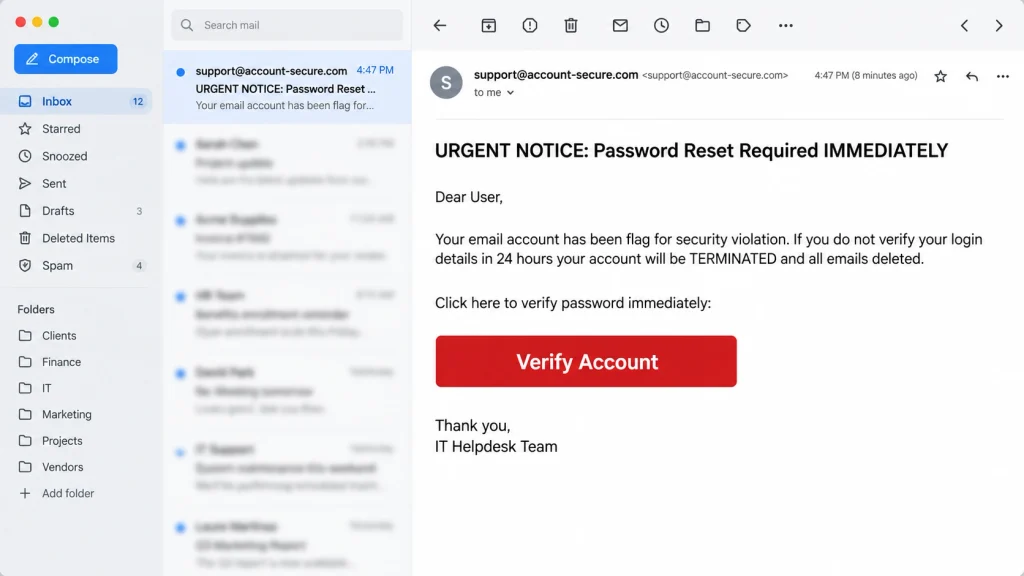
Emails like this have gone the way of the dodo bird now that AI has vastly improved the “quality” of phishing emails.
A new and improved, AI-generated version of the above email now looks more like this:
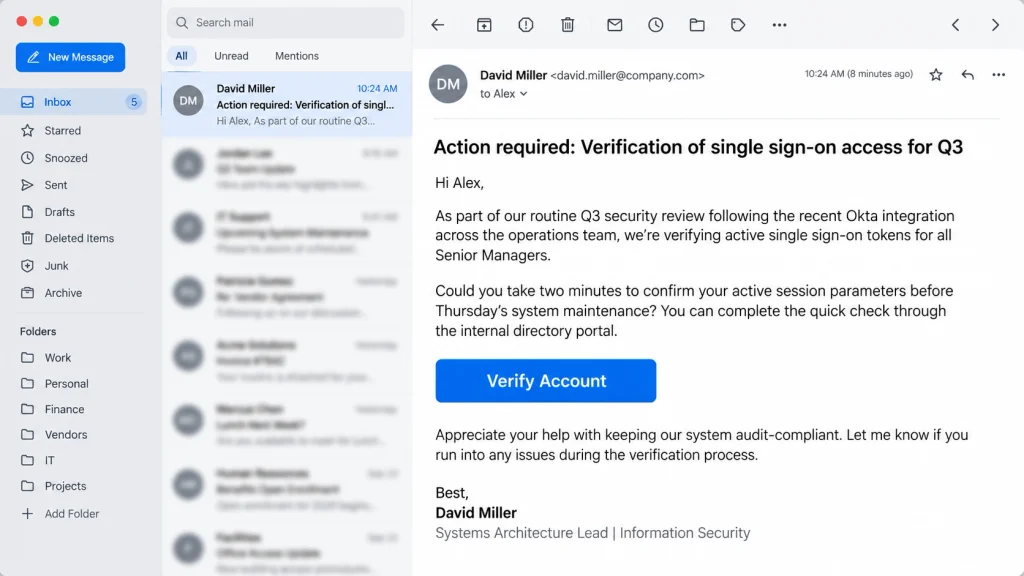
What was once a panic-inducing threat is now a calm, routine operational request, and professional wording and context have replaced chaotic text.
Are we out of luck, then? Just sitting ducks for an AI-generated phish so advanced that we’re just waiting for the one to take us all down?
There is no reason to lose hope. As attackers leverage generative AI to craft hyper-personalized, context-aware phishing emails free of traditional indicators like typos or broken code, email security developers are rapidly integrating defensive AI solutions to stay ahead.
Email security developers are training advanced machine learning models and behavioral AI to analyze communication patterns, recognize subtle intent, and flag synthetic threats in real time before malicious messages ever land in an inbox.
But going back to the email examples above. While the AI-generated email is leaps and bounds more advanced than the earlier version, they both share a common clue that they are both malicious. If you hover over the button link, you will see in the bottom corner of your browser a completely different destination address. This detail alone gives the game away and indicates that you should report the email.
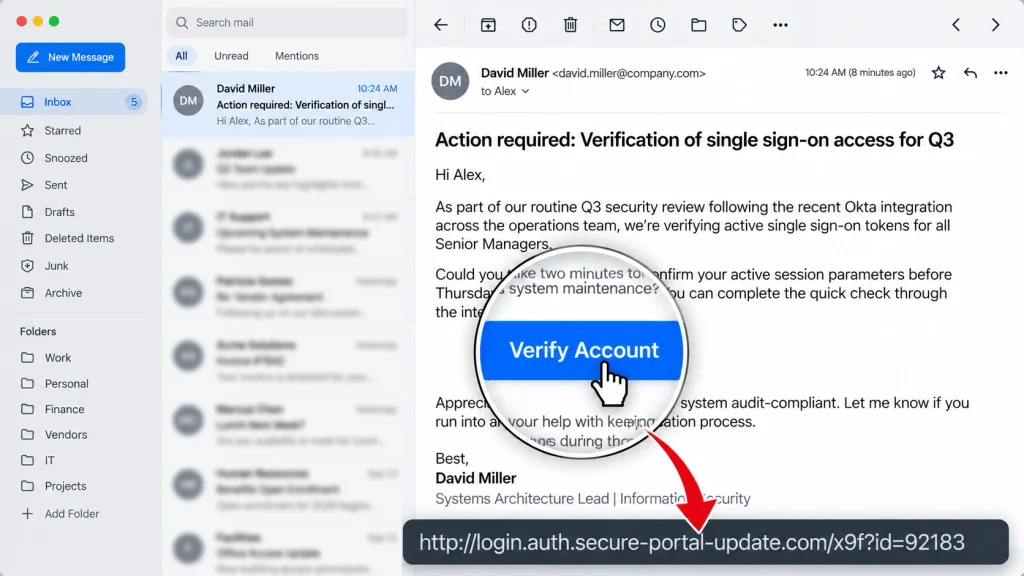
Your best actions are to:
- Stop before you automatically click any links.
- Verify potentially suspicious elements like embedded links or QR codes.
- Protect your account by reporting suspicious emails.
Even in an era dominated by artificial intelligence, relying on your own human intelligence is still your strongest defense against phishing attacks.
Are you ready for smarter phishing attacks?
Give employees practical resources to help them recognize suspicious messages, verify before they act, and build stronger security habits.
Get the CAM 2026 Resource Guide →
Cybersecurity Awareness Month 2026
Get practical resources to strengthen security awareness and build safer habits throughout October.